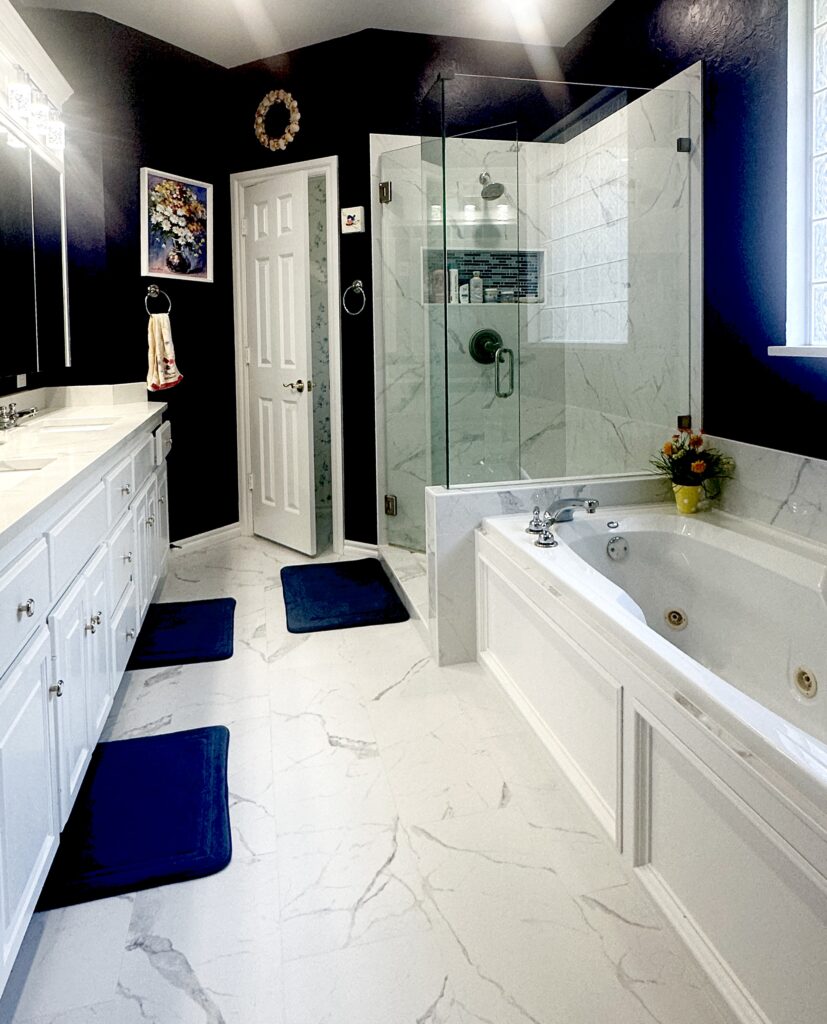
Quick answer: What should you check before calling a construction project complete?
Walk through the agreed work with your contractor, document unfinished or unsatisfactory items, and assign correction dates. Collect required inspection approvals, warranties, manuals and payment records. Recheck corrections before closing the list. Final completion involves both finished work and the closeout requirements in your contract—not simply a room that looks ready to use. (learn.aiacontracts.com)
This guide is for US homeowners and residential property managers. The walkthrough suggestions are practical organizing tools, not a technical inspection. Payment obligations, lien paperwork and permit requirements depend on your contract and jurisdiction; California and Alexandria, Virginia, examples below apply only to those locations.
1. Establish what “complete” means for your project
Start with the signed contract, specifications, approved selections and written change orders. Make a checklist of everything promised, including cleanup and documents—not just visible construction.
Construction contracts may distinguish substantial completion, when the work can be used for its intended purpose while limited work remains, from final completion, when remaining work and required closeout obligations have been satisfied. Your agreement determines the precise requirements and payment consequences. (learn.aiacontracts.com)
Before the walkthrough, ask:
- Which contracted tasks remain unfinished?
- Which substitutions or changes were approved?
- Are inspection corrections still outstanding?
- What documents must accompany the final invoice?
- Who will verify completed corrections?
Keep new preferences separate from defects. A different mirror you now prefer is not the same issue as a contractor installing the wrong agreed model.
Do not assume warranty periods start with the last payment. Depending on the contract, warranties may begin at substantial completion or another specified date. Record the actual start dates. (learn.aiacontracts.com)
2. Walk room by room and create an actionable punch list
A punch list records incomplete or defective contract work. AIA Contract Documents recommends precise descriptions, locations, useful photographs, responsible parties, due dates and a reviewer who confirms the correction. (learn.aiacontracts.com)
Schedule a joint walkthrough rather than trying to remember concerns during a hurried conversation. Have the scope, product selections and earlier correspondence available.
For each affected room, use the same sequence:
- Surfaces: Look at walls, ceilings, floors, trim, tile and other finishes under normal lighting.
- Moving parts: Ask the contractor to demonstrate doors, drawers, windows and installed hardware.
- Fixtures and equipment: Request normal-operation demonstrations where safe and appropriate.
- Adjacent areas: Check access routes and areas that were supposed to be protected or restored.
- Cleanup: Compare debris removal and cleaning with the agreed scope.
Describe observations without guessing their cause. Write “water visible inside the vanity after the faucet demonstration,” not “the drain was installed incorrectly.”
For photographs, take an overview showing location and a close-up showing the concern. Give both files the same item number. Preserve originals and avoid markings directly on finished surfaces unless the contractor agrees.
Use one shared list with a version date. Add separate fields for contractor reports corrected and owner or designated reviewer verifies corrected. Those are different steps.

3. Separate appearance issues from concerns needing professional review
Use these as practical sorting categories, not technical diagnoses:
| Category | Examples of observations | Suggested next action |
|---|---|---|
| Appearance or finish | Paint scuff, finish mismatch, visible scratch | Compare with the agreed finish and request correction |
| Operation | Drawer binds, door does not latch, fan does not start | Ask the contractor to investigate and demonstrate the correction |
| Potential safety or concealed-work concern | Water appears outside a fixture, unstable railing, electrical damage, unexplained movement | Arrange assessment by an appropriately qualified professional |
Prioritize safety, water intrusion, system performance and occupancy-related concerns ahead of finish touch-ups. That priority order is consistent with AIA’s closeout guidance. (learn.aiacontracts.com)
Do not remove electrical covers, open equipment, dismantle fixtures or conduct improvised structural or waterproofing tests. If something appears unsafe, stop using the affected fixture or area and seek qualified help; immediate danger calls for emergency assistance.
Ask for a written assessment when the issue’s cause or correction is disputed. Depending on the concern, that might involve an appropriately licensed plumber or electrician, an architect, an engineer or another qualified specialist. Your list should record the concern and referral—not present a homeowner’s observation as proof of code compliance or noncompliance.
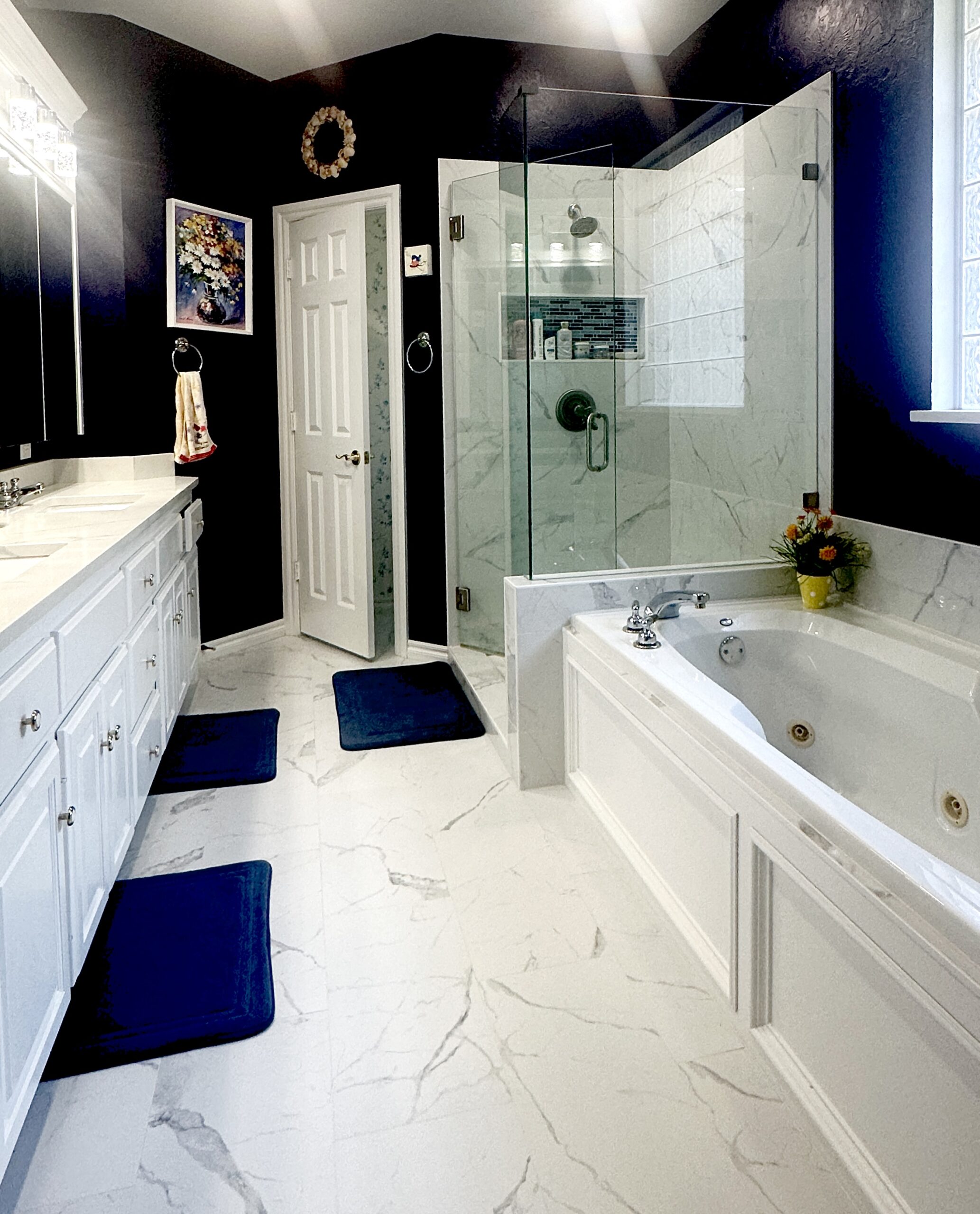
4. Worked example: a bathroom that looks finished
The following is an illustrative punch list, not a report of an actual project. It demonstrates how to document observations without inventing a diagnosis or declaring the room technically compliant.
For every row, add a photograph reference, responsible party, agreed correction date and verification date.
| ID | Location and observation | Requested action | What closes the item |
|---|---|---|---|
| B-01 | Entry trim: visible paint scuff | Restore the agreed finish | Review the repaired area |
| B-02 | Vanity: one drawer binds during normal opening | Investigate and adjust | Demonstrate normal operation |
| B-03 | Inside vanity: water appears after faucet use | Have a qualified plumber assess and correct the cause | Written explanation and appropriate verification |
| B-04 | Shower door: contacts another surface when opened | Have the installer review operation and clearance | Installer demonstrates corrected operation |
| B-05 | Exhaust fan: does not start during demonstration | Arrange qualified investigation | Demonstrate operation after correction |
| B-06 | Project file: final plumbing approval not supplied | Provide the record and confirm permit status | Verify the result with the authority |
| B-07 | Handover file: fan manual and offered labor warranty missing | Supply project-specific documents | Check that documents identify installed equipment and coverage |
Suppose the contractor addresses B-01 and B-02 during a return visit. Verify those items and mark only those rows closed. B-03 remains open until the concern is assessed and the correction appropriately verified; B-06 remains open until the relevant approval is confirmed.
Do not close the whole bathroom list because most items are finished. Equally, do not expand B-01 into an unrelated request to repaint another room. Keep corrections, missing documents and new paid work in separate categories.
5. Collect inspection approvals, warranties and operating records
Request a closeout folder organized by room or system. Depending on the project and contract, closeout documents can include record drawings, operating and maintenance information, warranties, inspection records, training information and access items. (learn.aiacontracts.com)
Use this recommended filing checklist:
Contract and financial records
- Signed agreement and approved changes
- Final itemized invoice and payment history
- Written resolution of allowances, credits or disputed charges
Permits and approvals
- Permit numbers and approved plans, where applicable
- Inspection results and correction notices
- Evidence that required corrections received approval
- Any occupancy or completion document required by the authority
Products and warranties
- Installed model and serial numbers
- Manuals and maintenance instructions
- Offered contractor and manufacturer warranties
- Coverage dates, exclusions and instructions for requesting service
Handover items
- Keys and access credentials
- Agreed spare materials or parts
- Demonstration notes and service contacts
Verify permit status independently rather than relying only on “the inspector came.” Ask the building department what approvals remain outstanding for your specific permits.
For example, Alexandria, Virginia, states that each issued permit must receive an approved final inspection. It also says photographs taken before work is concealed are not an accepted substitute for required inspections. Those are local requirements, not a nationwide rule. (alexandriava.gov)
Treat regulatory approvals and your contract checklist as separate checks. Do not use one as a substitute for reviewing the other.
6. Review final payment and jurisdiction-specific lien paperwork
The FTC advises consumers not to make final payment until the work is done and they are satisfied. Pair that guidance with a review of your actual contract and applicable law, especially if a payment is disputed. Do not invent a withholding percentage or assume you can delay every amount due. (consumer.ftc.gov)
Before payment, compare:
Original contract amount + approved additions − agreed credits − previous payments = proposed balance.
This is an organizing calculation, not a determination that the resulting amount is legally payable. Identify unresolved charges separately and ask for supporting records.
California lien example: CSLB warns that paying the main contractor—or obtaining that contractor’s release—does not guarantee subcontractors and suppliers have been paid. California distinguishes conditional and unconditional releases, including forms for final payment. A conditional final release becomes binding with evidence of payment to the claimant; an unconditional final release states that final payment has been received. (cslb.ca.gov)
CSLB’s California guidance describes obtaining signed conditional releases before payment and unconditional releases afterward from claimants paid for the work being released. (cslb.ca.gov)
Outside California, use your jurisdiction’s guidance and required forms. Do not copy California paperwork into another state’s project without checking suitability.
Seek local legal advice before signing an unclear release, accepting a settlement, withholding disputed payment or responding to a lien notice. Keep completion acknowledgments separate from broad waivers of claims unless you understand and intend their effect.
7. Complete the handover and document unresolved problems
Recommend a short handover meeting after corrections and document review. Use it to:
- Recheck each open item.
- Confirm receipt of the records and access items.
- Have the contractor demonstrate relevant equipment.
- Record any remaining obligation and agreed date.
- Identify who receives future warranty requests.
For landlords and property managers, arrange for the person responsible for maintenance to attend or receive the same operating information.
Avoid three common shortcuts:
- “We’ll come back later.” Ask for the item, responsible party and date in writing.
- “All complete” on an unfinished list. Record the actual status of each item.
- “The paperwork will follow.” Track missing records as open deliverables.
If a disagreement remains, send a factual written notice identifying the item, supporting evidence and requested resolution. The FTC recommends first trying to resolve problems with the contractor, following telephone discussions with a certified letter requesting a return receipt, and retaining records. It identifies state consumer protection agencies and local home builders associations as possible sources of outside help. (consumer.ftc.gov)
In California, CSLB accepts construction complaints but cautions that its regulatory investigation does not guarantee restitution. Consumers primarily seeking financial recovery should consider court remedies; substantial disputes may warrant an attorney. Do not assume filing a complaint guarantees repairs or repayment. (cslb.ca.gov)
Before archiving the project, make sure you can answer: What was completed, what remains, where are the records, and whom do I contact if a problem appears?