Quick answer
Do not assume that hiring a contractor automatically settles permit responsibilities. Before signing, identify who will apply for each required permit, pay the fees, arrange inspections, resolve corrections, and provide final approval records. Put those assignments in writing, then verify the permits with the issuing authority. A submitted application is not an issued permit, and an issued permit is not final approval. (cslb.ca.gov)
This checklist is for US homeowners hiring construction or remodeling contractors. Portland, Oregon, provides the worked jurisdiction example, specifically for one- and two-family homes. Portland applies different permitting guidance to buildings with three or more dwelling units; readers elsewhere should confirm their own authority’s requirements rather than copy Portland’s rules. (portland.gov)
1. Find the permitting authority for your property
Start with a question, not a permit application: “Does your department issue permits for this exact property address?”
Search your city or county’s official website for its building department, permitting office, or development services department. When you contact it, provide the street address and property type. Ask whether another agency handles any part of the proposed work.
Do not select an office simply because its name matches your mailing address. Have the office confirm jurisdiction before you rely on its checklist. Portland, for example, also issues building permits for the City of Maywood Park—an illustration of why the responsible authority needs verification. (portland.gov)
For the Portland example, begin with Portland Permitting & Development’s residential guidance. Its home-project information covers houses, duplexes, and two-unit townhouses, and it offers appointments to discuss project requirements. (portland.gov)
Prepare a short inquiry containing:
- The property address and number of dwelling units.
- Whether you occupy the home or rent it out.
- A plain-language description of the proposed changes.
- Any changes to walls, wiring, plumbing, gas piping, or ventilation.
- Whether contractors will perform all the work.
Save the department’s response with your project documents. If the answer depends on drawings or additional details, record what you need to supply rather than treating an initial conversation as approval.
2. Ask about the actual work—not just “a kitchen remodel”
Describe each part of the project separately. “Kitchen remodel” does not tell the department whether you are installing cabinets, moving plumbing, adding circuits, or removing walls.
Portland’s guidance illustrates the distinction: installing shelving and cabinets is listed among interior work that does not need a building permit, while moving, removing, or adding walls requires one. An electrical permit can still be required when no building permit is needed. (portland.gov)
Create a permit-question list before requesting bids:
| Proposed work | Question for the permitting authority |
|---|---|
| Replace cabinets without changing walls | Does this work require a building permit or another approval? |
| Remove or move a wall | What plans and building approvals are required? |
| Add outlets, lighting, or wiring | Which electrical permit covers this work? |
| Relocate a sink and its piping | Which plumbing permit is required? |
| Change ventilation or gas piping | Does a mechanical permit or other approval apply? |
In Portland, running new wiring and adding outlets or light fixtures require electrical permits. Moving plumbing pipes requires a plumbing permit. The city also identifies gas-piping changes as work requiring a mechanical permit. These are Portland examples, not nationwide thresholds. (portland.gov)
Ask whether the approvals will be separate or combined. Portland offers a residential combination permit package, but the relevant trade applications still have to be submitted; hired trade subcontractors must sign their applications. One package does not eliminate the underlying trade responsibilities. (portland.gov)
3. Name the applicant and inspection coordinator in writing
Separate three roles:
- Applicant: the person communicating with the permitting office and submitting documents.
- Contractor performing the work: the business responsible for construction.
- Inspection coordinator: the person arranging inspections and site access.
Portland’s application guidance distinguishes the contractor from the applicant, whom the city contacts about the permit and who uploads plans. Your agreement should make equally clear who handles these tasks. (portland.gov)
Ask each bidder to explain:
- Who submits the building and trade applications?
- Who prepares or obtains required plans?
- Are permit fees included, estimated, or excluded?
- Who answers plan-review correction requests?
- Who schedules inspections and meets inspectors?
- Who handles construction corrections and re-inspections?
- What approval records will you receive at completion?
California’s Contractors State License Board specifically advises that a contract identify who gets the necessary building permits. Use that as a useful contract-writing principle, while checking your own state’s requirements. (cslb.ca.gov)
Treat pressure to obtain an owner permit for contractor-performed work as a warning sign. The FTC lists contractors asking consumers to obtain required building permits among home-improvement scam tactics. That does not establish that every owner-filed application is improper, but it is a reason to verify the arrangement independently. (consumer.ftc.gov)
Before signing any “owner doing work” declaration, ask the department whether it accurately describes your arrangement. Portland restricts homeowner electrical work to qualifying owner-occupants and excludes rental properties and ADUs from its homeowner electrical allowance. Do not assume an owner-occupied-home exception applies to a landlord’s project. (portland.gov)
4. Verify issuance before permitting-dependent work begins
Ask for the issued permit and approved plans—not only an application receipt, payment confirmation, or screenshot saying “submitted.”
Portland’s review process includes intake, technical review, and pre-issuance. Even pre-issuance is a stage before the permit is issued. Applicants can follow activity in DevHub; non-applicants can follow permit status through PortlandMaps. (portland.gov)
Use this verification checklist:
- Address: Does the permit cover your property?
- Scope: Does the work description match the signed proposal?
- Identity: Does the record identify the expected contractor or applicant?
- Status: Has the permit actually been issued?
- Coverage: Are the expected building and trade approvals accounted for?
- Conditions: Are any required pre-construction approvals outstanding?
Portland instructs permit holders to print the permit, approved plans, and inspection card, keep plans on site, and display the inspection card. Its start guide also identifies circumstances requiring inspections before construction or ground disturbance begins. (portland.gov)
If the scope changes after issuance, ask the contractor to confirm the permitting consequences before proceeding. Portland notes that work differing from approved plans may require a permit revision. (portland.gov)
Common mistake: accepting “the permit is in process” as permission to start. If the status is unclear, contact the issuing office and ask exactly what work, if any, is authorized.
5. Plan inspection checkpoints before work is concealed
Have the contractor identify required inspections in the project schedule. For each checkpoint, record who requests it, who provides access, what work must remain visible, and which following tasks must wait for approval.
In Portland, permitted work must be inspected before it is covered by drywall, concrete, or backfill. The city also requires rough electrical, plumbing, and mechanical inspections to be approved before its framing inspection. Only inspections relevant to the project’s scope should be scheduled. (portland.gov)
For a remodel, request a simple inspection log:
| Checkpoint | Person responsible | Evidence to retain |
|---|---|---|
| Required rough inspections | Named contractor or trade contractor | Official result |
| Required framing or insulation inspections | Named coordinator | Approval or correction report |
| Corrections and re-inspections | Responsible contractor | Updated result |
| Trade finals and building closeout | Named coordinator | Final approval and permit status |
A booked appointment is not a passed inspection. Portland provides inspection results through DevHub and lists required corrections in inspection reports. Its plumbing guidance expressly requires approval before piping is covered and calls for re-inspection after corrections. (portland.gov)
Do not accept “the inspector stopped by” without checking the result. Portland also states that consultation visits do not count as approved inspections. (portland.gov)

6. Worked example: verify a Portland kitchen-remodel proposal
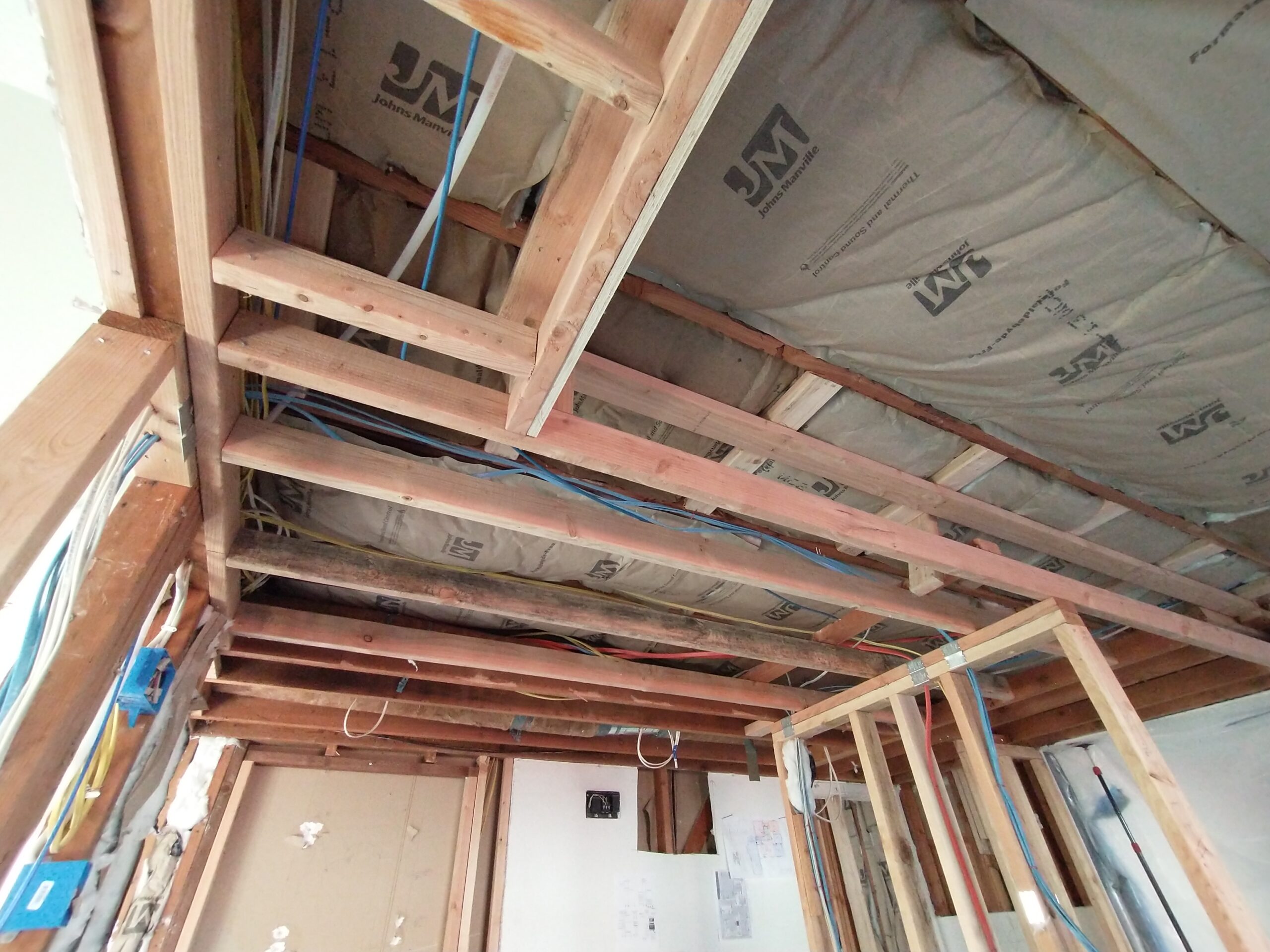
Illustrative project: You own and occupy a single-family Portland home. You plan to replace cabinets, relocate the sink, add outlets and lighting, and remove a wall. A general contractor will coordinate trade contractors.
This is a hypothetical verification exercise, not a permit determination or a description of a completed project.
Before signing, send that scope to the city and ask:
- What building approval and plans are required for removing the wall?
- Which electrical permit covers the additional outlets, lighting, and wiring?
- Which plumbing permit covers relocating the sink piping?
- Will the project use separate permits or a combination package?
- Which inspections must occur before walls are closed?
Portland’s published guidance supports asking about building approval for wall removal, electrical approval for additional wiring and devices, and plumbing approval for pipe relocation. The department must confirm the exact requirements for the submitted project. (portland.gov)
When comparing bids, replace “permits included” with a request for named assignments. Ask who submits the building application, which trade contractors sign the trade applications, and who coordinates inspection dates. Portland’s combination-permit guidance requires hired trade subcontractors to sign their applications. (portland.gov)
Before construction, collect the issued approvals and check their address and scope.
During construction, ask for the official rough-inspection results before the contractor closes the relevant work.
At completion, reconcile every permit with its required final approval. Do not let a completed cabinet installation become the only evidence that the permitting process is finished.

7. Collect final approval records before closing the project
Check each permit individually. In Portland, a standalone electrical permit needs its final electrical inspection, and a standalone plumbing permit needs its final plumbing inspection to close. The residential building-inspection guide identifies a final permit inspection that officially closes the building permit. Confirm the applicable closeout process for your particular permit arrangement. (portland.gov)
Ask the department:
“Are all permits associated with this project approved and closed? Are any corrections, inspections, or documents still outstanding?”
Request copies of issued permits, approved plans and revisions, inspection reports, correction approvals, and final status records. Keep these with your contract, change orders, receipts, and warranties.
Make document delivery part of the written completion requirements before signing. The FTC advises against making final payment until the work is done and you are satisfied. If completion or payment becomes disputed, review the agreement and seek appropriate local consumer or legal assistance rather than assuming a universal withholding right. (consumer.ftc.gov)
Your final practical check is straightforward: every required approval should have a named person responsible and an official record showing its status. If either is missing, ask a specific question before treating the project as complete.